1. Read about the following stylistic devices in advertising and identify them in ads below.
1. Visual Metaphor
Definition: Showing an idea or message through a symbolic image rather than stating it directly.
Examples:
- Absolut Vodka — “Absolut World” (bottle shaped into cities)
- WWF — animals turning into deforested landscapes
2. Pun / Wordplay
Definition: A humorous or clever use of words with double meanings.
Examples:
- FedEx — “The World on Time”
- McDonald’s — “I’m Lovin’ It” word-based teaser ads
3. Ellipsis (Intentional Omission)
Definition: Leaving out part of a word or sentence so the viewer mentally completes it.
Examples:
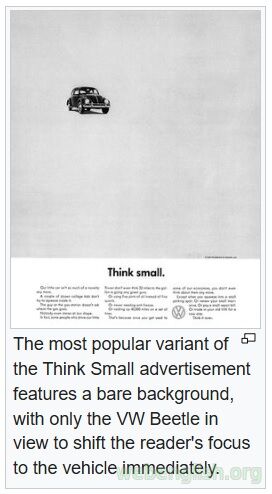
- Volkswagen — “Think Small” minimal ads
- Spotify — lyric-fragment posters
4. Exaggeration / Hyperbole
Definition: Deliberate overstatement to make a message humorous or striking.
Used in: Panasonic Nose Hair Trimmer
Examples:
- AXE Body Spray — exaggerated attraction ads
- Old Spice — absurd masculinity exaggeration
5. Humor
Definition: Using comedy or absurdity to make an ad memorable.
Examples:
- Snickers — “You’re Not You When You’re Hungry”
- Doritos — Super Bowl humor campaigns
6. Environmental / Ambient Advertising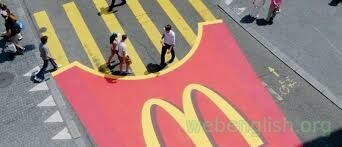
Definition: Ads that physically interact with the surrounding environment.
Examples:
- McDonald’s pedestrian crossing fries
- Coca-Cola vending-machine stunts
7. Symbolism
Definition: Using objects or visuals to represent broader ideas (e.g., freedom, safety, rest).
Examples:
- Apple — bitten apple = knowledge/innovation
- Nike — swoosh = motion/victory
8. Fear Appeal
Definition: Persuasion by highlighting danger or negative consequences.
Examples:
- UK Road Safety crash-impact campaigns
- Anti-smoking graphic ads
9. Emotional Appeal
Definition: Targeting feelings such as comfort, nostalgia, aspiration, or anxiety.
Examples:
- Google — “Year in Search”
- John Lewis Christmas ads
10. Minimalism
Definition: Extreme simplicity to create elegance and fast comprehension.
Examples:
- Apple product posters
- Calvin Klein fragrance ads
11. Synecdoche
Definition: A part represents the whole.
Examples:
- Eiffel Tower → France
- Statue of Liberty → USA
- Big Ben → UK
- → One landmark stands for the entire nation
- National flags representing countries
12.
- Antithesis (big ↔ small contrast)
-
Paradox (a statement that seems illogical at first)
-
Irony (going against expectation)
-
Understatement (modestly downplaying advantages)
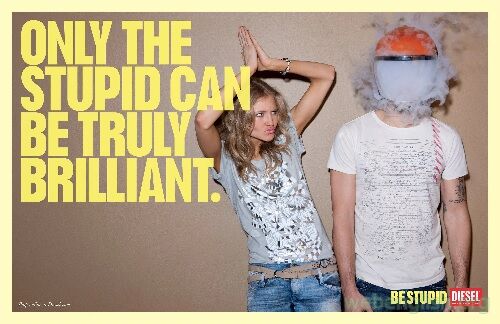
Definition: Saying or showing the opposite of what is expected to make a point.
Examples:
- Diesel — “Be Stupid”
13. Intertextual Reference
Definition: Referring to a known cultural phrase, show, or idea.
Examples:
- LEGO parody movie posters
- Pepsi pop-culture spoofs
14. Lifestyle Appeal
Definition: Linking a product to a desirable lifestyle or identity.
Examples:
- Rolex — success & prestige
- Red Bull — extreme sports lifestyle
15. Shock Value
Definition: Using surprising or disturbing visuals to grab attention.
Examples:
- Benetton controversial campaigns
- PETA animal-rights ads
2.1. What stylistic devices do you detect in these ads?
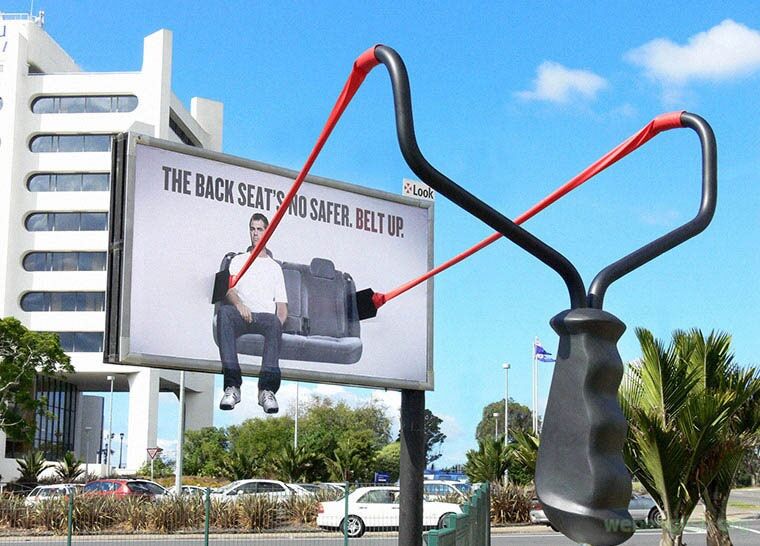

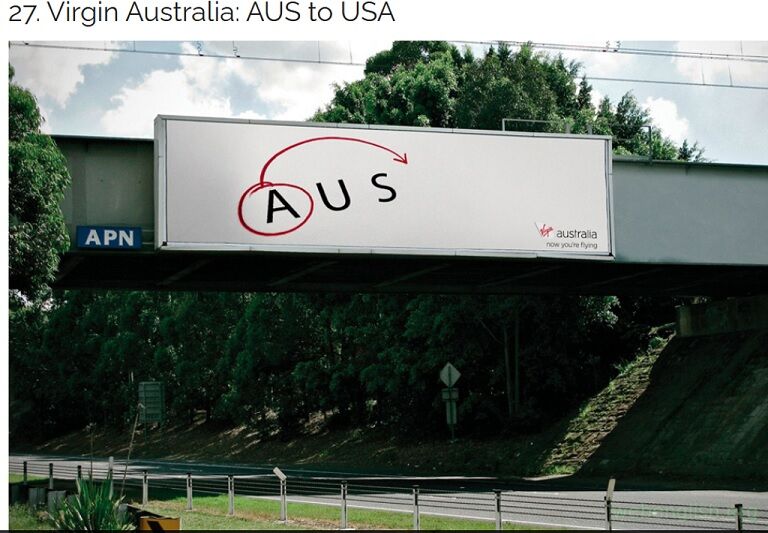
2.2. [Lomonosov] Write an analytical essay (250–350 words) in which you examine how one or two of the advertisements discussed in class persuade the audience.
In your essay, analyze the following aspects:
- The advertiser and product
Who created the ad, and what is being promoted? - The target audience
Who is the ad aimed at? Consider age, lifestyle, values, or social group. - The core message
What idea or attitude does the ad communicate? What does it want the viewer to think, feel, or do? - Stylistic and persuasive devices
Identify and explain at least 3 techniques, such as:- Visual metaphor
- Wordplay / pun
- Exaggeration
- Minimalism
- Humor
- Fear appeal
- Symbolism
- Inversion of expectations
- Synecdoche
- Environmental advertising
- Attention-grabbing techniques
Explain how the ad attracts attention (shock, surprise, humor, design, interactivity, emotional appeal, etc.). - Effectiveness and evaluation
Assess how effective the ad is. Does it persuade the viewer? Why or why not?
Optional Focus Prompts (Choose One if Helpful)
- How does the ad use creativity to stand out in a crowded media space?
- How do visual and textual elements work together to reinforce the message?
- How does the ad shape consumer behavior or social attitudes?
- Which stylistic technique contributes most strongly to the ad’s success?
Click here to show/hide Suggested Essay Structure
3. Interview: When Advertising Crossed the Line
Interviewer: Today we’re speaking with Dr. Marcus Feld, a historian of marketing and visual culture, about moments when advertising deliberately provoked outrage—and paid the price for it. Dr. Feld, why do scandals keep recurring in advertising history?
Dr. Feld: Because outrage is a shortcut to attention. Advertising competes in crowded media environments, and shock can cut through instantly. The danger is that shock often borrows symbols people hold sacred—religion, protest, identity. When brands misjudge that boundary, backlash follows.
Case 1: United Colors of Benetton — Religion as Shock Therapy
Interviewer: Benetton is often cited as the pioneer of “shockvertising.” Why?
Dr. Feld: In the 1990s, Benetton—under photographer Oliviero Toscani—used images that looked more like political posters than clothing ads. One of the most infamous showed a priest and a nun kissing. For many, it was sacrilegious. The Vatican condemned it, several countries banned the poster, and yet the brand’s visibility soared. The paradox is that Benetton claimed to promote tolerance, but it did so by violating religious taboos. The campaign cemented the idea that controversy itself could be a branding strategy.

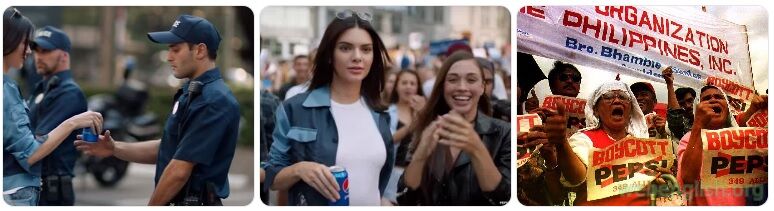
Case 2: Pepsi — Trivialising Protest
Interviewer: Pepsi’s 2017 ad caused a huge backlash. What made it so explosive?
Dr. Feld: The problem was simplification. The ad borrowed imagery from real protest movements and reduced them to a feel-good moment resolved by sharing a soda. Many viewers—especially younger audiences—felt that serious political struggles were being trivialised. Pepsi removed the ad within a day and issued a public apology. This case illustrates how, in the age of social media, misjudged symbolism is punished almost instantly.
Case 3: Dove — When a Message Is Read the Wrong Way
Interviewer: Can you give an example of a scandal that doesn’t rely on shock or adult themes?
Dr. Feld: A very instructive case is Dove’s 2017 Facebook advertisement. The short video showed a Black woman removing her brown shirt to reveal a white woman underneath, who then removed her shirt to reveal another woman of a different ethnicity. Dove intended to communicate diversity and inclusivity. However, many viewers interpreted the sequence as suggesting that lighter skin was somehow “cleaner” or preferable.
The backlash was immediate. Social media users accused the brand of reinforcing racial stereotypes, even though Dove had previously been praised for inclusive campaigns. The company apologised publicly and removed the ad. What makes this case particularly useful for teenagers is that it shows how meaning is not controlled by intention. Even without offensive language or imagery, the order, timing, and visual logic of an ad can completely change how it is understood.

Comprehension Test — Advertising Scandals (Benetton / Pepsi / Dove)
Read the interview and answer the questions by choosing one option.
1. Why do advertising scandals keep recurring, according to Dr. Feld?
2. What boundary does shock advertising often risk crossing?
3. What made Benetton’s campaigns especially controversial in the 1990s?
4. Which Benetton image is mentioned as a major source of outrage?
5. What paradox does Dr. Feld highlight about Benetton’s approach?
6. What was the key criticism of Pepsi’s 2017 Kendall Jenner ad?
7. What does the Pepsi case illustrate about today’s media environment?
8. What was Dove’s intended message in the 2017 Facebook video, according to the historian?
9. Why did many viewers find the Dove ad offensive?
10. What did Dove do after the backlash?
11. What core lesson does the Dove case teach (especially for teenagers)?
12. Which statement best matches Dr. Feld’s overall warning about outrage?
Total Questions: 12
Correct Answers: 0
Incorrect Answers: 0