To part 2
I. [ВОШ ДВИ МГУ, Ломоносов] Write an Essay on the Quotation
To what extent do you agree or disagree with this opinion? Give at least two reasons for your answer and include at least one relevant example from your own knowledge and experience.
Write at least 250 words. Your essay should consist of an introduction, a body of paragraphs and a conclusion.
Tips to generate ideas:
First, guess what the quote means, rephrase it in your own words.
Then, think of things that we must prevent not to pay a bigger price later. (public health, risk management, environmental issues, etc.)
Use the template in this exercise:
II. [ВОШ регион] Presentations. Work in pairs
1. Carry out a presentation
Student A (3–4 minutes): Set 1 — Benjamin Franklin
At the English Club, present key points about Benjamin Franklin for the project “Landmarks of American History.” Use the fact file headings:
- Franklin’s Legacy
- Franklin’s Social Origins and Rise
- Franklin and the Large Landowners
- His Social Identity
Set 1. Benjamin Franklin (1706–1790)
Franklin’s Legacy
- Founding Father; polymath: printer, publisher, scientist, inventor, diplomat, philosopher.
- Electricity experiments; lightning rod; bifocals; Franklin stove; civic innovations.
- Helped draft the Declaration of Independence (1776) and U.S. Constitution (1787).
- Ambassador to France; secured aid for the American Revolution.
- Founded libraries, fire brigades, educational institutions—embodying prevention and public service.
Franklin’s Social Origins and Rise
- Born 1706, Boston; 15th child of a candle-/soap-maker; 2 years formal schooling.
- Apprenticed as a printer; self-made through industry and thrift.
- By 1730s, a successful printer/publisher (Pennsylvania Gazette, Poor Richard’s Almanack).
- Owned property in Philadelphia, but not a large land baron.
Franklin and the Large Landowners
- Pennsylvania (Penn family): Criticized proprietors for avoiding fair taxation (esp. during French & Indian War); clashed in the Assembly.
- In England: As colonial agent (1757–1775), disputed with the Penns and Parliament; distrusted hereditary privilege and monopolies.
- Broad view: Respected productive farmers/smallholders; distrusted idle landlords; praised independent freeholders.
His Social Identity
- Prototype of the middling urban class—trade, craft, science.
- Merit and industriousness over birth and inheritance (Enlightenment ethos).
- Appealed to ordinary colonists and European intellectuals alike.
Use the following template for a presentation:
[Intro] Let me tell you a few words about.... . First, I will touch upon the historical background of …, then I will discuss…, finally …will be laid out/ I will talk about....
[Body] As to …, … / Now, on to …. /As for…, ...? -
[Conclusion] To recap, … That’s all about … Thank you for listening.
[Inviting questions] If you have any questions or doubts, please, feel free to ask.
Student B (3–4 minutes): Set 2. From Quitrents to Freeholds: Landholding in Early America
At the English Club, present key points about the development of American capital before the War for Inependence for the project “Landmarks of American History.” Use the fact file headings:
- 1) The Ownership Rights of American Proto-Oligarchs
- 2) How Colonial Trade Freedoms Were Restricted (Concrete Rules)
- 3) Land Distribution from Early Colonial Times into the 18th Century
- 4) What Helped Freelanders
- 5) The Dutch Patroons System and How It Was Mitigated
This topic explains how land in early America was owned, distributed, and controlled, and why the American system gradually moved toward freehold ownership, unlike many European models. It also shows how colonial land practices influenced politics and social structure.
1) The Ownership Rights of American Proto-Oligarchs
In early America, land and economic power were not evenly distributed. Certain groups held disproportionate control and can be described as proto-oligarchs — elites who dominated land, trade, and politics.
In the southern colonies, wealthy plantation owners controlled vast estates worked by enslaved labor. Their economic power allowed them to dominate local governments and assemblies.
In the northern colonies, merchant elites accumulated power through shipping, overseas trade, banking, and urban property rather than through agriculture.
Some powerful British institutions, such as the East India Company, held exclusive trade monopolies that restricted colonial economic freedom. These monopolies were strongly criticized by colonial thinkers such as Benjamin Franklin.
2) How Colonial Trade Freedoms Were Restricted (Concrete Rules)
Colonial trade was limited by a set of British mercantilist laws designed to keep profits, shipping, and manufacturing advantages inside the empire. Below are the main concrete rules that restricted colonial trade freedom.
1) The Navigation Acts (shipping + routing rules)
- Rule 1 — Ships: Many colonial goods could be shipped only on English or colonial ships (not on Dutch/French ships). In practice, rules often required English-built ships and predominantly English crews.
- Rule 2 — “Enumerated goods”: Certain valuable exports (often listed as tobacco, sugar, cotton, indigo, and later rice and naval stores) could be sent only to England or to other English colonies, not directly to foreign buyers.
- Rule 3 — Routing through England: Many goods (especially when destined for Europe) were required or pressured to pass through English ports, where they could be unloaded, taxed, and re-exported by British merchants.
2) Limits on colonial manufacturing (to avoid competition)
- Rule 4 — No competing industry: Colonies were discouraged or restricted from producing finished goods that competed with British manufacturers. Examples included laws limiting the production or export of certain iron goods, hats, and woolen textiles.
3) Monopolies and exclusive companies
- Rule 5 — Chartered monopolies: Some sectors of trade were controlled by British monopoly companies (e.g., the East India Company), which had exclusive trading privileges and could block freer competition.
4) Customs enforcement and courts
- Rule 6 — Duties, inspections, paperwork: Colonial imports and exports were subject to customs duties, inspections, and documentation, which increased costs and limited flexibility.
- Rule 7 — Admiralty courts: Smuggling and trade disputes were often tried in admiralty courts, typically without a jury, under rules colonists viewed as biased toward imperial enforcement.
5) Currency and finance constraints
- Rule 8 — Limits on colonial money: Colonies faced restrictions on issuing paper currency and managing credit, contributing to cash shortages and dependence on British financial networks.
Quick summary: These rules constrained who colonists could trade with, how they could ship goods, and what they could manufacture, so that colonial commerce served British economic interests.
Finally, British elites — including company directors, financiers, and aristocratic landowners — invested heavily in colonial enterprises. Although they often lived in Britain, their wealth and legal privileges allowed them to shape colonial economies from afar.
3) Land Distribution from Early Colonial Times into the 18th Century
Land in the American colonies was officially granted by the Crown, colonial proprietors (such as William Penn or the Calvert family), or colonial governors and assemblies.
Several forms of landholding existed simultaneously. Some land was organized into large estates, while other plots were granted as small freeholds owned outright by individual settlers. Many colonists held land as leaseholders, meaning they rented it from large landowners. In theory, these leases required the payment of quitrents, small annual fees acknowledging the authority of the original grantor.
Legally, land ownership required official documents such as charters or patents. However, enforcement was inconsistent. Squatting was common, and although Native American land purchases and treaties existed, they were frequently contested or ignored.
What does “squatted land” mean?
Squatted land is land that people occupy and use without legal ownership or official permission. In practice, settlers moved onto land, built homes, or farmed it before receiving a formal title. In early America, this was especially common on the frontier, and such claims were sometimes later legalized.
4) What Helped Freelanders
Several factors worked in favor of small landowners, often called freelanders.
First, land was abundant while labor was scarce. Colonial authorities therefore offered generous land terms to attract settlers. Second, quitrents were often poorly enforced, and many colonists openly resisted paying them.
Colonial governments actively encouraged immigration, especially from groups such as German farmers, Quakers, and other religious minorities who sought land and independence. Colonial assemblies often supported small landholders rather than large absentee landlords.
Over time, squatted land was frequently legalized, especially on the frontier. As a result, freehold ownership became dominant, contributing to a more egalitarian political culture and a strong belief in property-based independence.
5) The Dutch Patroons System and How It Was Mitigated
One major exception to the freehold trend was the Dutch patroon system in the Hudson Valley.
In the 1620s, the Dutch West India Company granted enormous estates to wealthy patroons. These landowners controlled tenants, collected rents, and operated manorial courts, creating a semi-feudal system.
After the English took control of the region in 1664, they confirmed existing patroon titles in order to maintain political stability. As a result, these large estates survived well into the 18th century.
However, tenant resistance steadily grew. This culminated in the Anti-Rent War of the 1840s, which finally dismantled the remaining manorial privileges.
The Dutch were not punished for this system because control rested with a private trading company rather than the Dutch crown, the Dutch Republic lacked the power to resist England, and international agreements such as the Treaty of Breda (1667) favored pragmatic compromise over punishment.
Key idea: Early America experimented with different land systems, but economic conditions, political resistance, and abundant land pushed society toward freehold ownership, shaping a culture that valued independence, mobility, and political participation.
Use the following template for a presentation:
[Intro] Let me tell you a few words about.... . First, I will touch upon the historical background of …, then I will discuss…, finally …will be laid out/ I will talk about....
[Body] As to …, … / Now, on to …. /As for…, ...? -
[Conclusion] To recap, … That’s all about … Thank you for listening.
[Inviting questions] If you have any questions or doubts, please, feel free to ask.
2. Q&A (2–3 minutes)
Answer two questions from your partner, using the fact file; otherwise, state your assumptions explicitly.
- I hope you found the overview of … informative. Now, I'd like to open the floor for questions.
- Please feel free to ask anything related to … you'd like to know.
- Let’s keep the conversation flowing. Any questions or thoughts you’d like to share about …?
- Thank you for the presentation. It was quite enlightening / convincing / engrossing. I was wondering about…
- Great presentation! … On a related note, could you share more details about…
- Kudos on the excellent rundown! … Can you shed more light on…
- Bravo on the insightful talk! … Could you give more context about…
- Your presentation was a breath of fresh air! … I’d like to know more about…
- … Firstly, could you elaborate …, specifically …?
Standard opener: Thank you for your question. I appreciate your curiosity. Regarding…
If the presenter cannot answer accurately:
- That’s a bit like a needle in a haystack. I don’t have the exact details, but let’s make some educated guesses about…
- You’ve thrown me a curveball! I don’t have the nitty-gritty, but let’s read between the lines and assume…
- That’s a real puzzle! I don’t have the missing pieces, but let’s connect the dots and infer…
- It’s a bit of a shot in the dark. I lack concrete facts, but let’s sketch a broad picture and suppose…
Introducing assumptions:
- Let’s hypothesize that… / We can presume that… / If we take an educated guess…
- For the sake of discussion, let’s infer that… / Let’s posit that… / If we make an inference, it could be that…
- Let’s speculate and assume that… / Let’s take a stab at it and assume that…
- Your ability to think on your feet and handle my inquiries was truly impressive.
- You showed a real masterstroke in dealing with tough questions—graceful and clear.
- You navigated uncertainties like a pro and kept the discussion flowing—much appreciated.
- I hope I answered your first question. The ball is in your court—anything else to explore?
- Great first question! If there’s another area you’re curious about, feel free to bring it up.
- I’m glad I could shed some light. Any other aspects you’d like to dig into?
- Fantastic question—if you have more up your sleeve, I’m all ears.
- Thanks for unraveling the first thread! Now, can you shed light on…
- Your response was eye-opening. Could we peel back another layer and discuss…
- Your explanation was crystal clear. I’m curious about another aspect—can you delve into…
- Great follow-up! You’ve opened a new avenue—let’s dive in.
- You’re keeping me on my toes—I appreciate the curiosity. Here’s the scoop…
- Fantastic—let’s unravel the key points behind your second question.
- Thank you for your insightful questions—you added real depth to our discussion.
- Hats off to everyone for the engaging Q&A; I hope the insights were useful.
- A round of applause for the vibrant discussion—your participation made it.
Thanking the jury:
- A big shout-out to the jury for providing excellent materials—true hidden gems.
- Thanks to the jury; your inputs were the missing piece of the puzzle.
- We’re grateful for the resources that guided our presentations—much appreciated.
Which two explanations of why quitrents were not collected by force are NOT mentioned in the text of the second presentation above?
Total Questions: 0
Incorrect Answers: 0
II. [ДВИ МГУ, Евразийская] Make up a summary on the development of American capital before the war for independence (Student B's set 2), using the fact file in set 1 below, send it for a check. Write about 20-25 sentences.
Use: was, is known to have been =известен тес, что был... , became, owing to ... =благодаря чему-либо, by =к ( какому-то времени), made him famous, renowned=famous
Use the template for summaries:
Summary (150–180 words)
Paragraph 1 – What the text is about (2–3 sentences).
The text discusses [topic] with [name/role]. The speaker/author explains that [central idea] and outlines [2–3 key areas]. Overall, the aim is to show [purpose/insight].
Paragraph 2 – Main points (4–6 sentences).
First, the author of the text/ passage [reports/argues/explains] that [point 1] because [reason/evidence].
Next, it is [added/pointed out] that [point 2], which [effect/implication].
[example or practice] also [illustrated/described] , showing how [result].
In addition, [point 3] is mentioned to demonstrate [why it matters].
Finally, the author [concludes/suggests] that [general conclusion].
Last sentence – One-sentence wrap-up.
Taken together, these ideas present [overall message/insight] about [topic].
Useful reporting verbs (B2): says, explains, argues, suggests, points out, notes, emphasises, adds, admits, concludes.
Paraphrasing moves: change word class (e.g., education → educated), use synonyms, change order of information, summarise examples in one clause, report speech (no direct quotes).
III. [ВОШ] Read the text below, then cover it and watch the video beneath. Take notes. After that, do the test on both the sources.
Show/hide text
Video
Integrated Listening and Reading Test
For each statement, choose where it appears: the video, the text, both, or neither.
1. The Boston Tea Party took place on December 16, 1773.
2. 342 barrels of tea were dumped into the harbor.
3. The three ships were named Dartmouth, Eleanor, and Beaver.
4. Colonists disguised themselves as Native Americans before boarding the ships.
5. Colonists bought smuggled tea even when it was more expensive than British tea.
6. About 30 to 130 colonists boarded the ships.
7. Britain responded with the Coercive (Intolerable) Acts.
8. The protesters caused no damage to the ships or other property, only the tea.
9. The Coercive Acts closed Boston port, restricted town meetings, and forced colonists to house troops.
10. The event contributed to the formation of the Continental Congress.
11. Women such as Abigail Adams were active participants in the Boston Tea Party.
12. The tea was packed in wooden chests (not teabags) before being thrown into the harbor.
Total Questions: 12
Incorrect Answers: 0
IV. [Высшая Проба] 1. Below are dairy entries of three American of different social strata living at the time of the Boston Tea Party. Who wrote each entry? Drag words into correct gaps
Diary of a Boston — The is shut and my lies idle while the calls the tune and would make me a mere . Yet I begin to think we might be a people at last—true .
Diary of a near Concord — The roads shake under the boots of , and the groans as climb. We gather with and speak of , praying the will turn in our favor.
Diary of a Boston — Work is scarce and is dear, but the talk in the is all of . We will stand our together and help forge a new .
Total Questions: 0
Incorrect Answers: 0
[Высшая Проба] 2. In the name of a Boston merchant above write a story about how the Boston tea party changed your life.
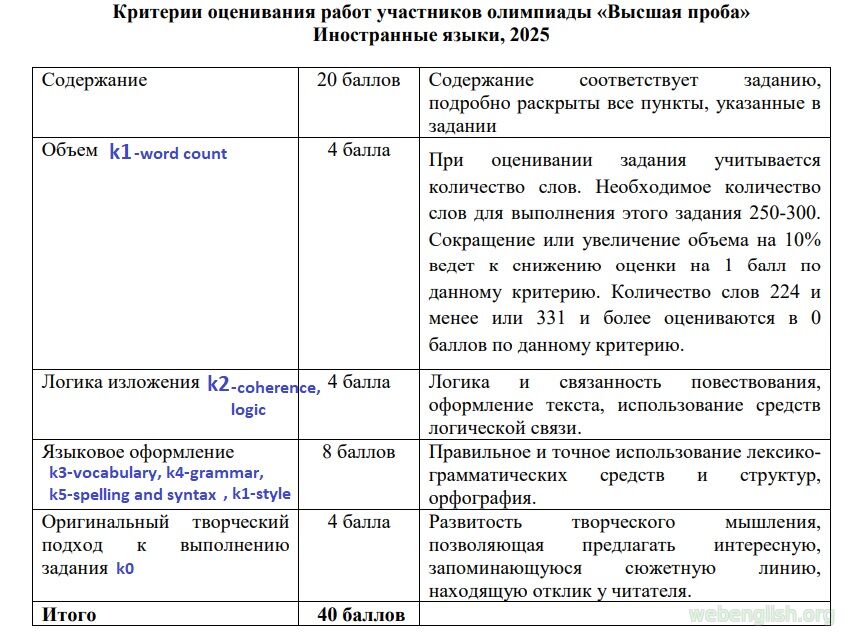
Attention! Remember to describe characters in your story, use direct speech at least once and show how the characters changed over time, as well to narrate about your life prior the Roman conquest, your life during the conquest and your life after it. Write 250 words +- 10%
Tip: Always include character description, direct speech, idioms and proverbs even if it is not mentioned in the task in the olympiad!
Here are ways to introduce character description into your story:
Look through the lesson and try to use as many new words from it as possible!
To make sure your syntax in direct speech in your story is correct, watch my video about it. And give your thumbs-up👍):
Assessment and Scoring criteria in Higher Probe
To part 2