I. Intro. Edward I
1. Read and listen to the text and take notes.
Britain in the Late Middle Ages from 1272 to 1529
(1)This period was marked by war, civil strife, plague, and economic crisis. (2) England and Scotland fought bloody wars that preserved Scotland’s identity but caused many deaths. Both suffered the Black Death, while England endured peasant and aristocratic uprisings, and Scotland saw two kings murdered. (3) Yet the era also brought Renaissance culture and the invention of the printing press.
The Reign of Edward I
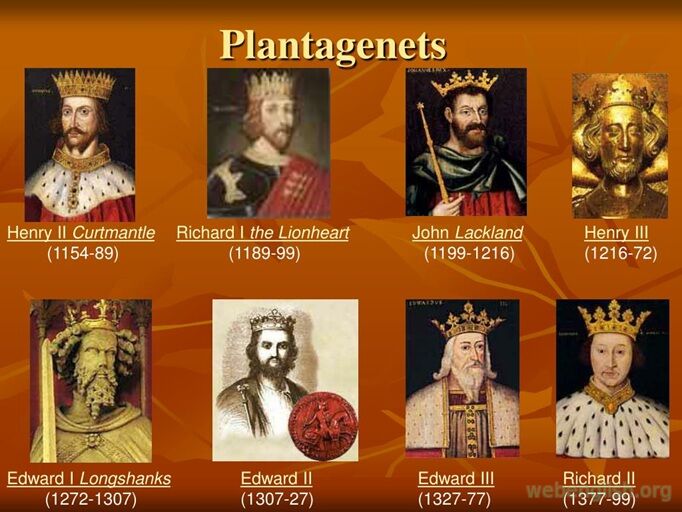
(4) Of the House of Plantagenet, Edward I was England’s most capable ruler since William the Conqueror, reigning from 1272 to 1307. (5) He was known as a skilled general, organizer, and a farsighted statesman. His English name reflected rising national identity. (6) Constantly in need of money, he used parliaments to secure taxes. (7) Attendance was at royal discretion, though major lords were always included. (8) Sometimes representatives of knights and burgesses—the commons—were summoned, but they were not yet essential.
(9) Parliaments mainly raised taxes and heard grievances. (10) They acted like a high court, where petitions and disputes were addressed, and were protected as sacrosanct institutions.
(11) Edward also targeted England’s Jews. (12) In 1290 he expelled them, the first such action in medieval Europe, forcing them into exile until the 17th century. (13) Their departure pushed the crown toward Italian bankers, especially in Lombard Street, which became the center of English finance.
2. Find in the text above synonyms for the following words
Fill in the blanks with the correct words from the text.
| kept / maintained | |
| rebellions | |
| creation | |
| competent leader | |
| governing | |
| visionary politician | |
| showed | |
| increasing | |
| collect taxes | |
| by royal choice | |
| called | |
| collected taxes | |
| listened to complaints | |
| conflicts settled | |
| banished |
Total Questions: 0
Incorrect Answers: 0
3. Prepare Answers to these Comprehension Questions (Use at least 1 idiom in your answer)
-
1. What major challenges did England and Scotland face in the late Middle Ages, and how did these shape their identities?
-
2. What role did parliaments play under Edward I, and how were representatives chosen?
-
3. Why did the English crown turn to Italian bankers, particularly those in Lombard Street?
4. Read the following text and try to explain the grammar behind the expressions highlighted. Find in the text other examples of these grammar rules, if any, and make up your own sentences with them.
The Anglo-Scottish Wars
- Edward’s conquest of Wales was only the start of his expansionist policy.
- After the death of Alexander III of Scotland (1241–86), his granddaughter Margaret of Norway was named heir, but she died in 1290, ending the Canmore dynasty.
- With no clear successor, rival nobles claimed the throne, and Edward I was asked to arbitrate.
- He chose John Balliol, who in 1291 swore fealty to Edward as overlord of Scotland.
- Edward, however, treated Balliol as a vassal, even demanding Scottish troops for his wars in France.
- Resentful nobles revolted, allied with France, and Balliol renounced his homage in 1296.
- Edward invaded, forced Balliol into exile, and carried off the Stone of Destiny, but soon found Scotland difficult to control.
- Harsh English rule provoked uprisings, notably those of William Wallace and Andrew Moray, who won at Stirling in 1297 before being crushed at Falkirk in 1298.
- Wallace was later captured and brutally executed, becoming a Scottish martyr.
- In 1306 Robert the Bruce rebelled, killing his rival Comyn and claiming the crown.
- After Edward I’s death in 1307, Bruce gradually secured power, defeating the English decisively at Bannockburn in 1314.
- The Declaration of Arbroath (1320) asserted Scottish independence, declaring freedom more precious than life itself.
- Peace came with the Treaty of Edinburgh in 1328, when England recognized Scotland as a separate kingdom.
- Bruce died the following year, succeeded by his son David II.
5. Fill in the blanks with the correct words from the text.
- быть назначенным наследником = to heir
- арбитрировать / выступать арбитром = to
- присягнуть на верность = to fealty to
- недовольный, возмущённый =
- союзничать с = to with
- отречься от своей присяги = to one’s
- изгнание =
- утверждать, заявлять = to
- быть преемником = to
Total Questions: 0
Incorrect Answers: 0
6. Read the rule and translate the sentences below into English.
Translate into English:
- Я назначаю тебя наследником. →
- Ты был избран лидером восстания. →
- Я сделаю тебя арбитром в этом споре. →
- Ты стал мучеником для своего народа. →
- Я провозглашаю тебя королём Шотландии. →
Total Questions: 0
Incorrect Answers: 0
7. I pairs act out the following dialogues. Use as much of the provided active words and grammar as possible
The Black Death & Refusal to Pay Tax — Active words & grammar
Parliament & Noble Discontent — Active words & grammar
Wallace & English Soldier — Active words & grammar
Robert the Bruce & Papal Envoy — Active words & grammar
Treaty of Edinburgh Negotiation — Active words & grammar
8. [Высшая Проба] What the video about the Black Death, do the test on it (Task1) and summarize it in one paragraph (Task1)
Task 1. Black Death in England — True / False / Not Stated
1. The demographic collapse caused by the epidemic weakened landowners’ bargaining power over rural workers rather than strengthening it.
2. England’s transformation into a European military power was completed only after the population had recovered from the pandemic.
3. The interruption of military campaigns shows that the epidemic affected state policy as well as everyday life.
4. The decline in church authority described in the video resulted primarily from doctrinal disputes rather than from clergy mortality.
5. In later outbreaks on the Continent, some regions experienced mortality as high as 80–90%, mirroring the most extreme figures mentioned in the script.
6. The rise in wages described in the video reinforced feudal obligations and restored the traditional balance between peasants and lords.
7. Cultural change following the epidemic included increased reliance on non-Latin forms of expression.
8. Similar labour shortages during seventeenth-century epidemics in Eastern Europe led to the immediate abolition of serfdom.
9. The Peasants’ Revolt is presented as a direct success that immediately dismantled the existing social hierarchy.
10. During later epidemics in other European kingdoms, urban population loss produced economic effects identical to those described for London in the script.
Total Questions: 0
Incorrect Answers: 0
Show/hide explanations
Task 2. Watch the video (In the olympiad you will be asked to listen to an audio) again and write a paragraph summarising the text you have just listened to.
You should follow the structure:
• a topic sentence;
• supporting arguments;
• a concluding sentence.
The paragraph must contain 100 – 120 words.
Show/hide carcass phrases
8.1. In some olympiads [Eurasian, ВОШ, etc.] you can be asked to write an interview with a historic person or book/movie character. Spanning around 250 words. In the model of such an interview fill in the gaps with the write words.
Перетащите слова из банка в пропуски. Некоторые слова не используются.
Interviewer: You come from the age of the Black Death, a time that, by all accounts, took a devastating on medieval Europe. How did you manage to survive when so many were ?
Farmer: , I’d say. Whole villages were wiped out, families torn . Pestilence the land, leaving more silence than song. I worked the soil, buried my kin, and somehow carried on. To this day, I wonder if it was fate or simply hard luck that spared me.
Interviewer: Looking back, what stands out to you most?
Farmer: The sheer fragility of life. We had little knowledge— and prayers were our only weapons. Every day felt like , when one misstep might mean the end. Yet, amidst grief, the seeds of change were sown. I recall whispers of reason, a faint , though few then understood it.
Interviewer: Now that you’ve seen modern medicine, what is your impression?
Farmer: I am in awe. Truly, your physicians seem magicians. To see plagues curbed by , to watch broken bones healed with steel and light—it humbles me. The human mind, once bound by fear, has risen like . You’ve , yet each defeat spurred greater victories.
Interviewer: And what do you think of how people today face new infections?
Farmer: With courage, though not without folly. Fear still lingers, yet knowledge arms you better than superstition ever did. It has taken a cruel toll on our world, yes, but wisdom and will—the progress—have carried us through.
Interviewer: Any final words?
Farmer: Cherish what you have. For me, the journey from to miracle cures is nothing short of wondrous.
Total Questions: 0
Incorrect Answers: 0
8.2. One of the criteria in Olympiad creative writing is the writer’s creative approach. Suggest ways in which the dialogue could be extended or rewritten to create an unexpected twist or heighten suspense.
Analyse this table of creativity raising ploys:
| Ploy | Work (Author, Year) | Real Excerpt | Suspense Effect |
|---|---|---|---|
| Unreliable narrator | The Tell-Tale Heart — Edgar Allan Poe (1843) |
“True!—nervous—very, very dreadfully nervous I had been and am; but why will you say that I am mad?” |
Denial of madness heightens doubt; reader questions every “fact.” |
| Frame story | Frankenstein — Mary Shelley (1818) |
“You will rejoice to hear that no disaster has accompanied the commencement of an enterprise which you have regarded with such evil forebodings.” |
Letters frame a confession; layered voices foreshadow hidden horrors. |
| Shifting point of view | The Moonstone — Wilkie Collins (1868) |
“Here follows the first part of the narrative written by Gabriel Betteredge, house-steward in the service of Julia, Lady Verinder.” |
Multiple narrators contradict; truth emerges through competing accounts. |
| Red herring / misleading foreshadow | The Hound of the Baskervilles — Arthur Conan Doyle (1902) |
“The appearance was, you will admit, remarkable.” |
Hints of the “supernatural” misdirect toward rational, human crime. |
| Climactic reversal (peripeteia) | Oedipus Rex — Sophocles (c. 429 BCE) |
“I stand revealed at last—cursed in my birth, cursed in marriage, cursed in the lives I cut down with these hands.” |
Self-revelation inverts the hero’s quest; horror peaks instantly. |
| Confinement / ticking clock | And Then There Were None — Agatha Christie (1939) |
“The sea was as a sheet of glass. The house was empty.” |
Isolation on an island + dwindling survivors = escalating dread. |
| Mundane turned sinister | “The Lottery” — Shirley Jackson (1948) |
“The morning of June 27th was clear and sunny, with the fresh warmth of a full-summer day…” |
Pastoral normalcy curdles into ritual violence; shock by contrast. |
| Dream / reality blur | “An Occurrence at Owl Creek Bridge” — Ambrose Bierce (1890) |
“His body, with a broken neck, swung gently from side to side beneath the timbers of the Owl Creek bridge.” |
Last-second reveal recasts the “escape” as an execution fantasy. |
| Symbolic doubling | The Double — Fyodor Dostoyevsky (1846) |
“Another person… exactly like himself!” |
Doppelgänger embodies fractured identity; paranoia and self-undoing. |
| Moral dilemma | Sophie’s Choice — William Styron (1979) |
“You may keep one of your children.” |
Impossible choice generates unbearable, slow-burn moral suspense. |
In class ask me to suggest you a way to expand the above interview in such a way as to gain the highest score on creativity. A blend of what suspense-building ploys is it?
8.3. [Высшая проба] Variant 1. In the name of a farmer living in England in the late middle ages write a story about how the Black Death changed your life.
Attention! Remember to describe characters in your story, use direct speech at least once and show how the characters changed over time, as well to narrate about your life prior the Plague, your life during the epidemic and your life after it. Write 250 words +- 10%
Variant 2. Imagine that you are a time-traveller and you happen to find yourself in the described time period. Write a story about your experience in this new environment. You must include the following points:
• the characteristics of the time period;
• how you have adapted to the new environment;
• how this experience has influenced your personality;
• whether you would like to stay (or not) and why.
You must write 250 – 300 words.
Tip: Always include character description, direct speech, idioms and proverbs even if it is not mentioned in the task in the olympiad!
Here are ways to introduce character description into your story:
Look through the lesson and try to use as many new words from it as possible!
To make sure your syntax in direct speech in your story is correct, watch my video about it. And give your thumbs-up👍):
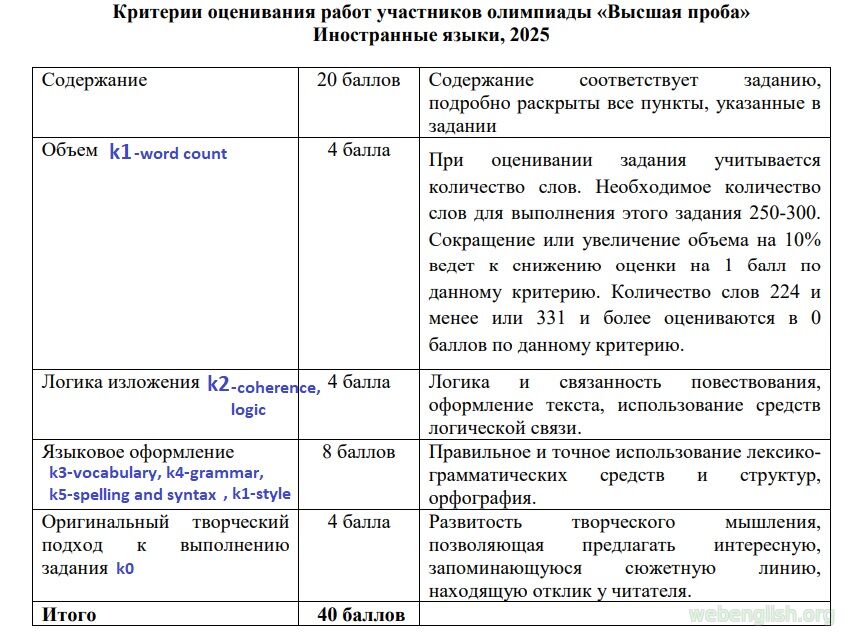
Assessment and Scoring criteria in Higher Probe