Modern movie houses are becoming f more immers than traditional cinemas. Many now use laser projection and even direct-view LED screens, w make the image brighter, sharper, and colourful.
Premium formats also focus on immersive sound, so view s can hear effects com from different directions. Some cinemas offer ScreenX, where the picture expands to the side walls, creating a 270-degree viewing exper .
Others use 4DX, with moving seats, wind, vibrat , fog, water, and even scent effects sync iz with the action on screen. Together, these technologies turn a film from simple watching a ysical and emotional experience.
Total Questions: 0
Incorrect Answers: 0
11. What can be inferred about the film's production budget?
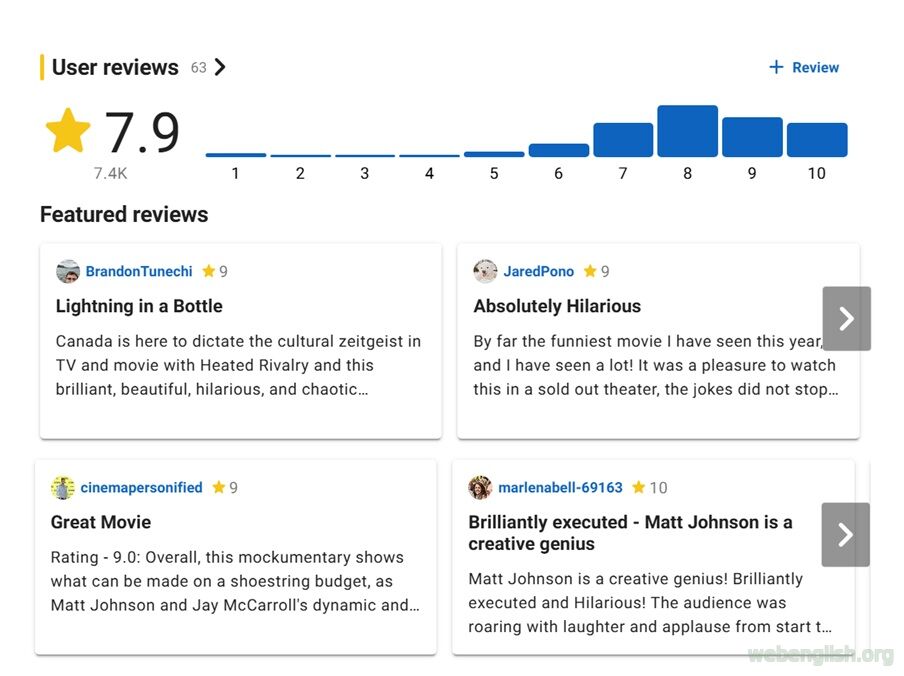
12. Which statement is best supported by the reviews?
13. What is most likely true about audience reactions during screenings?
Total Questions: 0
Incorrect Answers: 0
A Night at the Symphony Hall: When AI Took the Baton
Posted by ConcertTraveller • 3 days ago • Rating: 8/10
I bought a ticket largely out of curiosity. The idea of attending a classical music concert conducted by a humanoid robot sounded like something straight out of a science-fiction novel. I expected a gimmick; instead, I witnessed a surprisingly thought-provoking performance.
The robot conductor, named Maestro-X, stood on the podium in a formal tailcoat and directed the orchestra using movements generated by an advanced AI system trained on recordings of famous conductors. For the most part, the musicians followed its cues effortlessly. The performance itself was polished and technically precise, and there was not a note out of place.
Yet precision can be a double-edged sword. While the orchestra played with remarkable accuracy, some passages felt as though they had been drawn with a ruler rather than a paintbrush. During the more emotional sections, I occasionally found myself missing the spontaneity and unpredictability that human conductors often bring to the stage.
That said, the audience was clearly captivated. People leaned forward in their seats, and conversations during the interval revolved around whether artistry can truly be programmed. The loud applause at the end suggested that even sceptics were willing to give the experiment the benefit of the doubt.
Would I attend another AI-conducted concert? Probably. Not because I believe robots will replace human maestros any time soon, but because the event raised fascinating questions about the future relationship between technology and the arts.
14. What was the reviewer's initial expectation before attending the concert?
15. What does the reviewer imply by saying that some passages were "drawn with a ruler rather than a paintbrush"?
16. Which statement is most accurate?
17. What can be inferred about the audience?
Total Questions: 0
Incorrect Answers: 0
Reading Passage
Social Media and the Developing Brain
Paragraph 1
A careful reading of recent research does not support the simple claim that social media destroys young people’s brains. The evidence is more limited and more complicated. Certain patterns of use, especially compulsive checking, endless scrolling, notifications, short algorithmic videos, and emotionally charged feedback, may influence how the developing brain responds to reward, attention, and habit formation. The concern is not merely that teenagers spend time online, but that some digital environments repeatedly train them to expect quick novelty and constant social response.
Paragraph 2
One brain-imaging study followed children in early adolescence and found that those who checked social media more habitually showed different developmental patterns in areas linked to reward, emotion, and self-control. These areas included parts of the brain involved in social evaluation and emotional importance. However, the authors were cautious. Their findings showed an association, not proof that social media alone had directly changed the brain. Other factors in the children’s lives could also have contributed to the pattern.
Paragraph 3
Another study followed more than 8,000 children from about ages 9–10 to 13–14. It found that heavier use of social media was followed by a gradual increase in attention problems, while television, videos, and gaming did not show the same link. One explanation is that messages, alerts, and the expectation of new posts may leave a kind of mental tab open, making it harder for children to focus steadily on one task.
Paragraph 4
Still, the total number of hours online may be a weak explanation. Recent longitudinal work suggests that addictive or compulsive patterns are more important: craving the device, feeling distressed when unable to use it, and letting online activity interfere with schoolwork, sleep, exercise, or relationships. Other large studies have found no clear evidence that simply spending more time on social media or gaming causes later anxiety or depression. What teenagers do online, how they feel while using it, and how supported they are offline may matter more than raw screen time.
Paragraph 5
Short-video platforms are especially debated. Reviews of the research report worrying patterns connected with addictive use, self-esteem, and the spread of harmful mental-health content. Yet the evidence is not fully settled. Strong causal proof remains limited, and the effects probably depend on the kind of content, the child’s emotional state, the design of the platform, and whether the child can stop using it without distress.
Paragraph 6
The most defensible conclusion is therefore moderate. Scrolling may not simply damage the brain, but it may shape young people’s attention and reward systems toward fast stimulation and frequent social comparison. For Gen Alpha, the key question is not only how many hours are spent online. It is also what kind of content is consumed, how strongly the feed is personalized, whether online activity interrupts sleep and study, and whether use remains under the child’s control.
Questions
16. What is the main idea of the passage? [Question Type: Main Idea]
The passage argues that the issue is not simple screen time, but particular habits such as compulsive checking, algorithmic feeds, interruptions, and loss of control.
17. Why does the author mention the brain-imaging study in paragraph 2? [Question Type: Author’s Purpose]
The study is used as evidence of a possible relationship between frequent checking and brain development, but the author stresses that it does not prove direct causation.
18. Which of the following best describes the ambiguity in the research? [Question Type: Inference]
The passage discusses sleep, study, compulsive use, personalization, content type, and emotional state, but it does not mention screen size as an important factor.
20. Which sentence best expresses the essential meaning of the final paragraph? [Question Type: Paraphrase]
The final paragraph says that the main concern is not just time online, but the content, algorithmic design, interruptions, and whether children can regulate their use.