Back to Part 1
3. [Высшая Проба] Imagine that you are a British tribesman/smith/farmer. Write a story about how your life changed when Romans appeared in the south of the British Isles. Mention also the change in your relations with the Southern Celtic tribes.
Tip: Always include character description, direct speech, idioms and proverbs even if it is not mentioned in the task in the olympiad!
Here are ways to introduce character description into your story:
1. Adjective-Packed Description Before the Noun [most expected in olympiad writing]
Describing a character using a vivid series of adjectives before the noun creates a dynamic and visually rich portrayal. It immediately captures the reader's imagination while propelling the narrative forward.
Example:
Sarah, a tall, slim, long-legged princess of her kingdom, with bright blue eyes and freckled rosy cheeks, had never imagined being captured by the Celtic marauders and taken prisoner. Now, shackled in a dim, smoky hall, she faced a fate she had thought impossible—being married off to one of the barbarian king's ruthless sons.
2. Physical Description [most expected in olympiad writing]
Directly describing a character’s appearance helps readers form a visual image. This approach is straightforward but effective when crafted with evocative language.
Example:
Samantha was a tall, willowy woman with piercing green eyes that seemed to see through every lie. Her auburn hair fell in effortless waves, a stark contrast to the sharpness of her gaze.
3. Actions and Behavior [most expected in olympiad writing [as an additional ploy]
Showing a character through their actions and behaviors allows the reader to infer personality traits rather than being told directly.
Example:
Jack’s hands trembled as he fumbled with the coffee cup, spilling a few drops onto the table. “I-I’m sorry,” he stammered, his voice barely above a whisper, avoiding the barista’s kind but piercing gaze.
4. Dialogue [as an additional ploy]
What a character says and how they say it can reveal their personality, background, and intentions. Full syntax for direct speech ensures clarity and rhythm.
Example:
“I don’t care what it takes,” Marissa said, her voice steady and low. She locked eyes with the group, her tone slicing through the tense silence. “We finish this tonight. No excuses.”
5. Internal Thoughts [as an additional ploy]
Using inner monologue provides a glimpse into a character's mind, revealing fears, motivations, or hidden traits.
Example:
As the storm raged outside, Clara sat by the window, her mind racing. "Why do I always say yes?" she thought bitterly, her stomach twisting into knots. The weight of obligation pressed down on her like the gray clouds above.
6. Other Characters’ Perspectives [as an additional ploy]
Revealing a character through how others perceive or react to them adds depth, often showing aspects the character themselves may not reveal.
Example:
To Liam, his grandfather was a giant of a man, larger than life. Even in his old age, the way he carried himself commanded respect, and people fell silent when he entered the room. “He’s unstoppable,” Liam would say in awe. “Like a force of nature.”
7. Environment and Context [as an additional ploy]
A character’s surroundings, belongings, and the spaces they occupy can reflect their personality and lifestyle.
Example:
The walls of Evelyn’s room were lined with bookshelves, each crammed with dog-eared novels and meticulous notes. Her desk was a battlefield of crumpled paper and half-empty coffee cups, a testament to her relentless pursuit of perfection. “You call this organized?” her sister teased, stepping into the chaos.
8. Symbolism and Metaphors [as an additional ploy]
Using figurative language to describe a character adds layers of meaning and richness to the narrative.
Example:
Peter moved through the crowd like a shadow, unnoticed and unbothered. His presence was as fleeting as smoke on the wind, and just as intangible. “He’s here, then he’s gone,” someone murmured, shaking their head.
9. Contrast [as an additional ploy]
Highlighting differences between characters emphasizes their unique traits, creating dynamic relationships or tension.
Example:
Where Julia was loud and brash, declaring her every thought as though it were a royal decree, her sister Lila was a quiet whisper, content to blend into the background. “Do you always have to speak for me?” Lila finally asked, her voice soft but firm.
10. Character’s Interactions with the World [as an additional ploy]
A character’s relationship with objects and their environment can convey personality or emotional state.
Example:
Michael ran his fingers over the old guitar, his touch reverent. Every nick and scratch on the wood was a story, a memory etched in the grain. “This guitar,” he murmured, his voice tinged with nostalgia, “it’s been with me through everything.”
11. Reactions to Conflict [as an additional ploy]
How a character responds to challenges or adversity reveals their true nature and values.
Example:
When the alarm blared, Emily didn’t hesitate. While others panicked, she grabbed the nearest fire extinguisher and charged toward the flames. “Step back!” she shouted, her voice ringing with authority. Her jaw was set, and her eyes burned with determination.
Look through the lesson and try to use as many new words from it as possible!
Still have no ideas what and how to write? Use this template with active words from our unit:
Title: [Your Title Here]
Target length: ~250 words (±10%)
Paragraph 1 — BEFORE: hook + who I am + life as it was
- Opening hook: Before the Romans came, [our village/my life] revolved around [seasons/trade/tribal duties].
- Character snapshot (laconic): I am a [stocky/tall], [weathered/plain-spoken] farmer with [calloused hands/steady temper].
- Context words (pick a few): coastal rulers, rival chiefs, landlords, coinage, die cutters.
- Sample frame:
“Before the invasion, I [worked/paid/gathered] with my kin; we traded a little with [coastal rulers], argued with [rival chiefs], and paid our [landlords] in grain. Roman [coinage]—some cut by foreign [die cutters]—was rare in our lanes.”
Paragraph 2 — ARRIVAL: contact/conflict + one line of direct speech
- Set the turn: Then the Romans arrived, quickly and [violently/decisively].
- Detail 1: They had plotted their move and ferried the troops across the Narrow Seas after careful reconnaissance.
- Direct speech (1 line required):
“‘How dare you mark a road across our fields?’ I said, though the centurion only pointed at the new routes.” - Optional contrast connector: Although we resisted, the imposition of Roman rule followed.
Paragraph 3 — DURING: changes in daily life (tools, roads, towns, food)
- Tools/agriculture: They brought iron ploughshares, crop rotation (alternating grains with legumes), and better drainage.
- Towns/infrastructure: Forts, a whopping wall up north, straight routes, and busy markets.
- Culture/food: We tasted wine, olive oil, garum—gastronomically new.
- Relation phrase: Trade and diplomatic relationships flourished (at least along the coast).
Paragraph 4 — AFTER: withdrawal + what remained
- Departure: When the legions left, some forts were abandoned, roads faded.
- What stuck: But the methods stayed: deeper ploughing, granaries, enclosures.
- Balanced view: Despite the losses, some gains endured.
Paragraph 5 — REFLECTION: lesson + closing line
- Weighing up: On the one hand… On the other hand…
- Result/lesson: Consequently, we learned to work the land better and to trade wider.
- Closing voice: “Take my word for that,” I tell my son when he asks if the change was worth it.
To make sure your syntax in direct speech in your story is correct, watch my video about it. And give your thumbs-up👍):
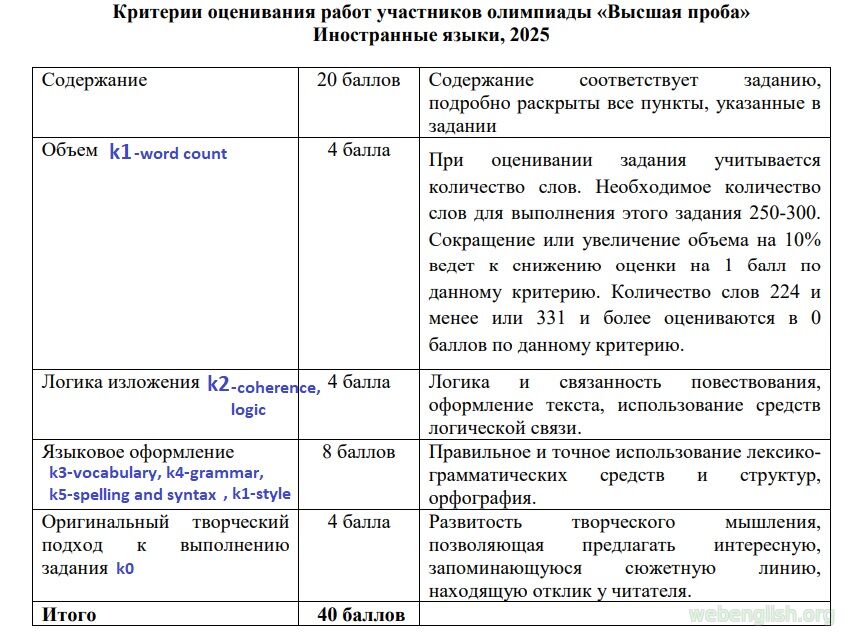
Assessment and Scoring criteria in Higher Probe